Nerdophiles enjoyed an exclusive interview with Executive Producer, Co-Writer, and BAFTA-winning star of the Paramount+ series Dreaming Whilst Black, Adjani Salmon (My Jerome), to discuss all things Season Two. Season Two finds Salmon’s Kwabena living at home, still trying to get his big break as a director. When the opportunity presents itself, Kwabena has to determine if he has to sell out on his creative integrity to advance in the business. Salmon spoke to us about Kwabena’s strategy while dreaming this season, his love life, his proximity to power in work, and so much more.
On the universality of Black stories, he shared: “I think there’s a misconception that universality means dilution, which actually, time and time again, the opposite proves to be true, right? I think that actually specificity is universality. The truth is everybody, no matter their background, has a family, has friends, has experiences—love, loss, grief, laughter, anxiety, all the things. And I think for people to understand something, you need context. And I think all specificity is, is providing the wider audience the context as to why they feel the way they feel. So for us, thankfully, with Paramount and A24, they’ve always allowed us to lean into that and be like, make it as true to life as you can. So that’s our perspective. But also, thankfully, we’ve been protected by our company and network to do that.”
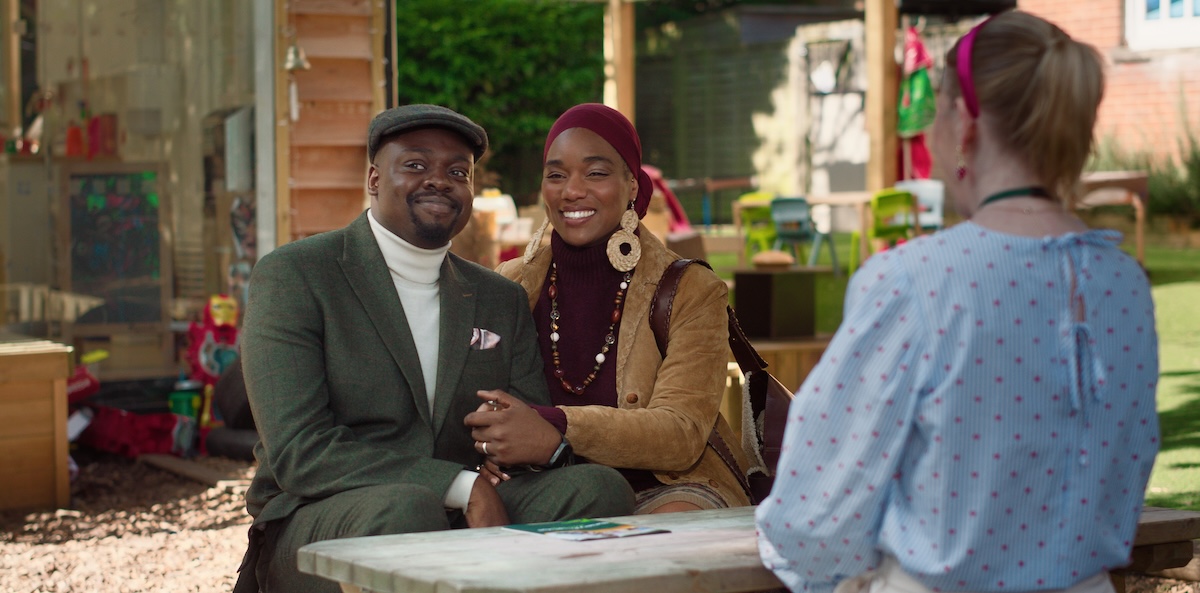
On Kwabena’s dreaming becoming less romantic and more strategic this season, he remarked: “I think the difference in Season Two is that by the end of Season One, Kwabena was outside of the industry, and he had these rose-tinted lenses of what it’s like to be a filmmaker. And at the end of Season One, that lens gets stripped away. So what we really see in Season Two is Kwabena seeing the world for what it is. He no longer—it’s like you dream of the thing, but when you get it, you’re not like, ‘Oh, this is it,’ right? In the same way of me wanting to buy a car and finally buying a car and being like, ‘Yeah,’ but then it’s like, ‘Oh no, I need to buy gas. It’ll break down, and now I need money to fix the tires and stuff,’ right? So he just now sees the reality of what he’s dreamt of.”
On Kwabena separating validation from self-worth this season, he continued: “We see him go on that journey trying to serve two masters—one being his integrity and the other being his boss—and realizing that, you know, that’s too many plates for him to juggle. And I think that’s what we see throughout the season: him learning which one he can sleep with better at night, which one makes him sleep better at night. And we hopefully—well, I guess everybody has to watch and see which one he chooses.”
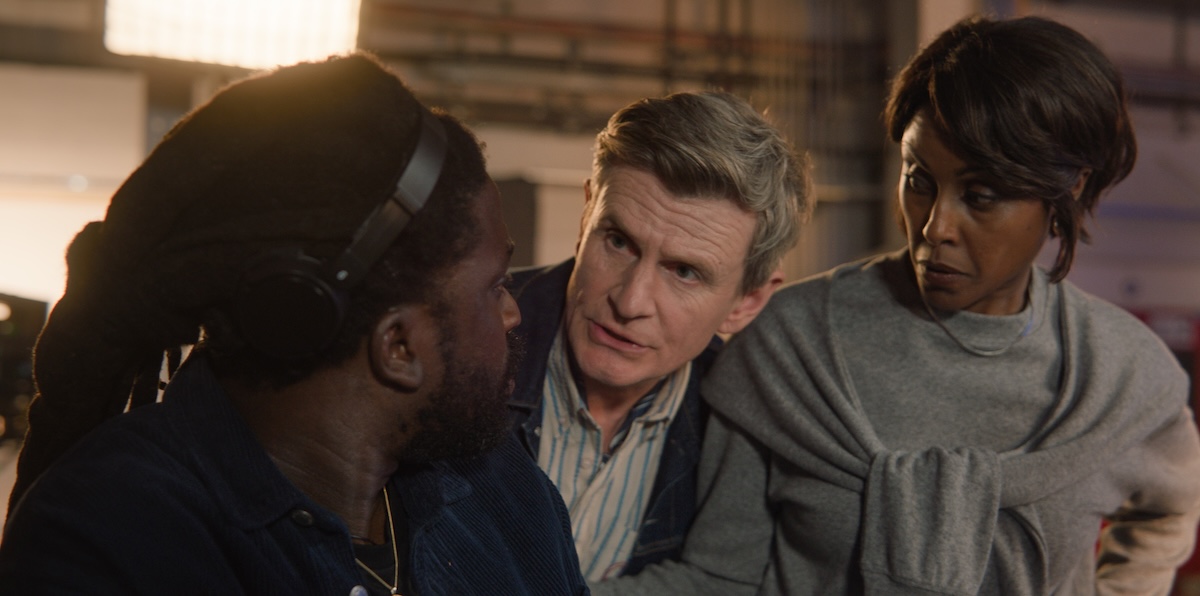
On this season being a cautionary tale, survival guide, or both, he told us: “Dreaming Whilst Black has always been a cautionary tale for us. It’s both—a duality of a cautionary tale and a roadmap, right? When we see a cautionary tale, the idea is that we don’t make the same mistakes as that person. So for us, when we wrote the show, we just kind of wrote it to pay homage to our friends in the industry, as well as giving our roadmap to young creatives coming up to be like, ‘Look, y’all are trying to get in. This is what it is.’ And that’s not to deter them from entering, but just to make them aware of exactly what they’re entering into. Because in many ways, for myself, I wasn’t aware of all the things that come with being in the industry myself. So I would have loved it if somebody told me too.”
On second chances in love for Kwabena, he said: “We had a big debate in the writers’ room about this—about second chances and whether they should be given and how they should be earned. And for us, especially in Episode Four, it’s a complex situation where we’re creating a character, we’re creating a protagonist who needs flaws, but we don’t want to give him the stereotypical flaws that we normally see—like poverty-stricken circumstances, drugs, or gangster stuff—but he still needs flaws. And for us, this was a way of exploring patriarchal masculinity in a soft way and how it’s holding back the mandem. Part of that is the compartmentalization of emotions. Part of that is not wanting to be vulnerable in front of women. And part of that is the idea of what a good man is, or what a high-value man is, right?”
He added: “So we intentionally wanted to give Kwabena these flaws so that we could have that conversation and explore that, and also give grace and understanding as to why he wouldn’t express himself, right? Because in Season One, we saw the dream sequence of what it was like if he did—or what it could be if he did. And equally, in Season Two, we just wanted to explore why the mandem are struggling. We get it. Dating is hard. Black women are frustrated by Black men a lot. And we just wanted to give a window as to why we’re like this. We’re not saying it’s a great thing. We’re just saying this is the reason why we are like this. But we thought it was important to explore Black masculinity in our romantic context this season.”
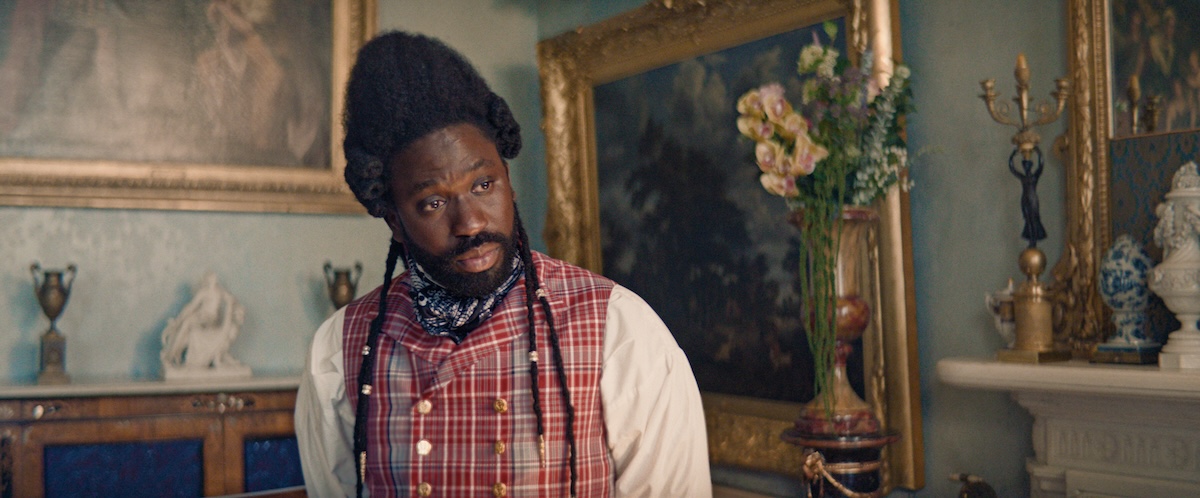
On how Kwabena’s ability to show up for himself professionally allows him the space to show up romantically as well, he exclaimed: “We’re all interconnected. So I do think that the minute you start showing up for yourself in one aspect of your life, it tends to have a domino effect, right? For example, I started jogging because I put on a bit of weight between Season One and Season Two, so I was like, ‘I need to start jogging,’ right? But in doing that—and that was just a goal—I inherently started eating better, right? So it always has a knock-on effect: improve one aspect of your life, and it will have a domino effect on the rest. So in the sense of Kwabena, the more he kind of fights to show up for himself professionally, it will have a knock-on effect on how he shows up to his family, particularly Uncle Claude, but also in his romantic relationships with Vanessa.”
On speaking his truth as a creator, he echoed: “I think the only responsibility I can have is to speak my truth and speak the truth of me and my writers and creators. So whether that be not just in the writing room, but like all the artists who we work with, regardless of department, all we can do is try to reflect our truth. And it’s that thing, like we said earlier—hope that our specificity is what translates and appeals to everyone else. So the only responsibility I have is to tell the truth and trust that that truth resonates.”
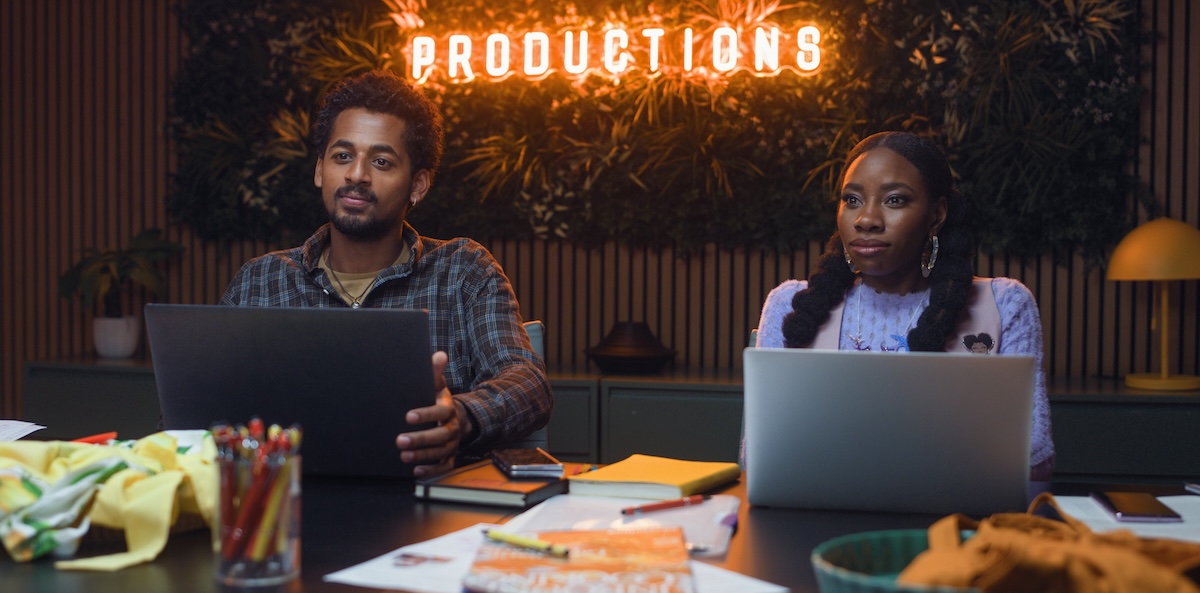
On the Black storytellers whose shoulders this body of art stands on, he concluded: “Dreaming Whilst Black stands on the giants of the Black British shows that came before us, and we also stand on our African American friends who we see as distant older cousins. So for us, I think this season we’ve taken inspiration from Insecure, Atlanta, and Ramy, which are shows we love. But equally, we take inspiration from authors like Stuart Hall. There’s a book called The Glass Cliff: Why Women in Power Are Undermined — and How to Fight Back by Sophie Williams, which was heavily inspiring for us, and obviously bell hooks and Audre Lorde. So we stand on not just TV shows, but also just art in general and music. So yeah, I don’t know if there’s one specific show, but we definitely stand on the shoulders of people like Issa Rae, Donald Glover, Michaela Coel, Daniel Lawrence Taylor, and more artists who are just making good work.”
Catch Season 2 of Dreaming Whilst Black when episodes drop on Fridays on Paramount+!
 English